Loading…
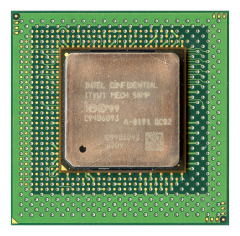
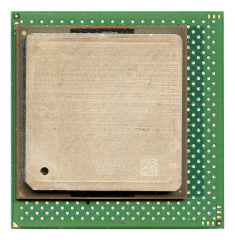
Pentium 4 (Socket 423)
Launched in 2000Willamette (80528)
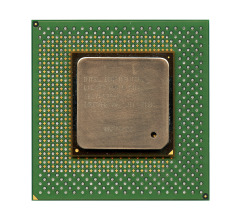
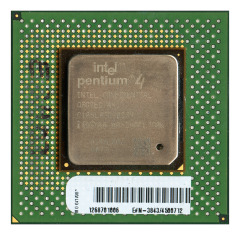
The Intel Pentium 4 for Socket 423 is the first desktop implementation of Intel’s NetBurst microarchitecture, introduced in late 2000 as a major break from the P6 design used in the Pentium Pro, II, and III, emphasizing very high clock-frequency scaling through an extremely deep pipeline, a rapid-execution double-pumped integer ALU, and a trace cache that stores already-decoded micro-operations instead of conventional x86 instructions. Based on the 0.18 µm Willamette core, Socket 423 Pentium 4 processors retained full IA-32 compatibility and SSE2 support, but paired the new core with a 400 MT/s quad-pumped front-side bus and typically Rambus-based chipsets to provide the memory bandwidth required by NetBurst’s aggressive design. Unlike later Socket 478 Pentium 4 models, Socket 423 had a short commercial life and was limited to early Willamette parts, making it primarily a transitional platform for Intel’s first-generation NetBurst rollout rather than a long-lived mainstream socket. Technically, these CPUs are significant as the initial expression of the Pentium 4 concept: a frequency-driven x86 architecture that sacrificed some per-clock efficiency in favor of much higher target clock rates than the mature P6 family.